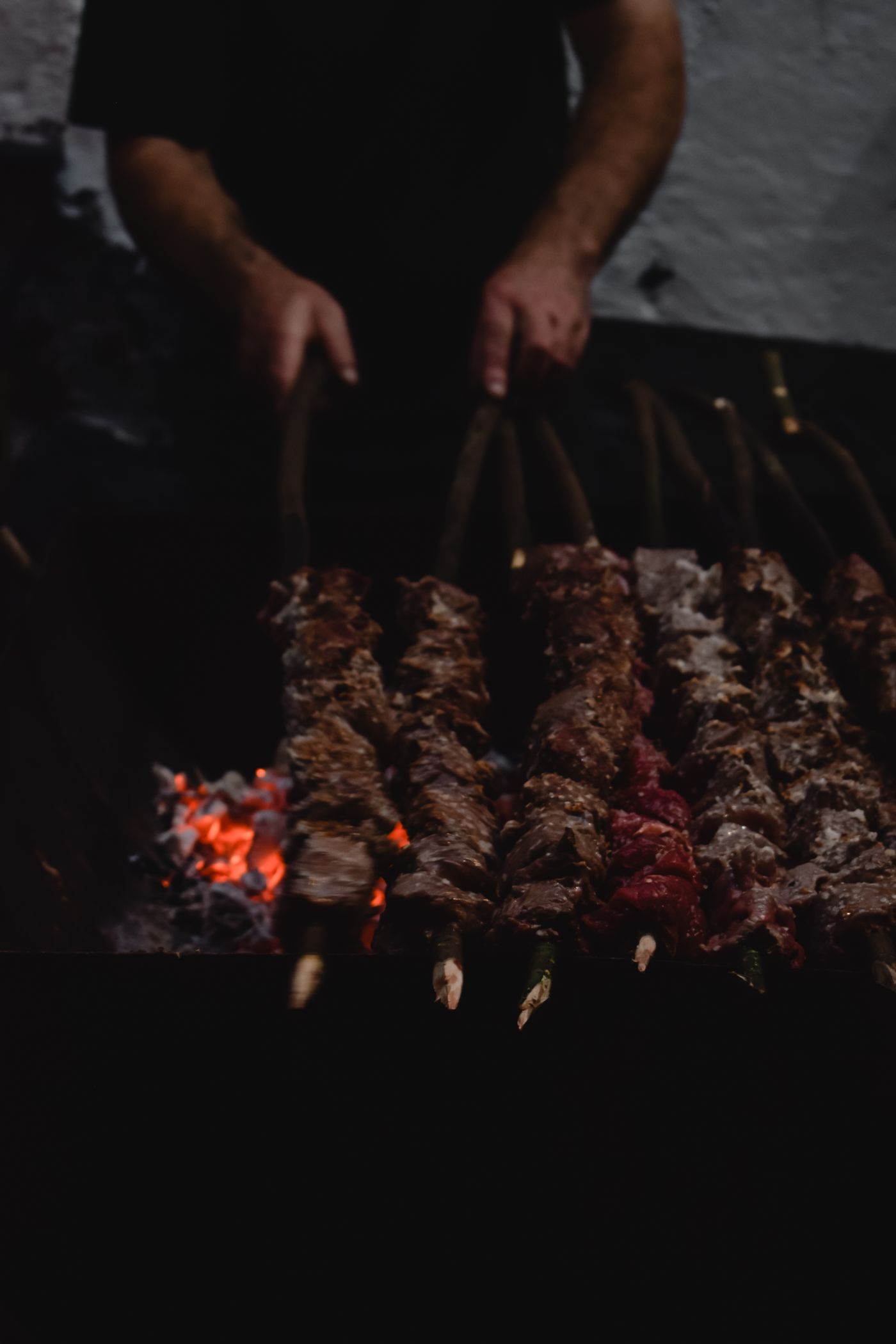
Espetada on the grill: beef on bay-laurel sticks, cooked over wood embers, nothing fancy about it.
The table · island-wide
The Madeira table
An island that cooks over wood and laurel, bakes its bread on a hot stone, and drinks something the rest of the world usually meets at the bottom of a trifle. Here is what shows up on the plate, and why.
Madeira food is not subtle and does not pretend to be. It comes from a place that grew sugarcane and bananas on terraces, fished a strange deep-sea fish out of very cold water, and learned to make a fortified wine that could cross an ocean without spoiling. Put those three facts together and you have most of the menu. The cooking sits closer to a backyard grill than a tasting room, and the island seems happy about that.
If you eat one thing here, make it the meat on a stick.
Espetada, and the smell that finds you first
You usually smell it before you see it. Espetada is chunks of beef rubbed with garlic and bay leaf, threaded onto a long stick of bay-laurel wood, and grilled over wood embers. That skewer is called an espeto, and the laurel is not decoration. As the meat cooks, green wood gives off a faint herb smoke that gets into the beef, which is the whole point.
At the mountain restaurants above Câmara de Lobos and around Estreito and Santo da Serra, espetada often arrives hung from a tall metal stand at the table, the skewer hooked at the top so the beef drips down. Underneath sits a slice of bread to catch the juice, which by the end is the best thing on offer. You pull the chunks off with your fingers or slide them down with a piece of bread. Salads and bowls of fried things land alongside, and that is dinner.
Bread off a stone
The bread that comes with everything is bolo do caco, and the name is a small lie. It sounds like a cake; really it is a flat, round wheat bread, soft and slightly chewy, traditionally baked on a flat basalt stone called a caco rather than in an oven. You will almost never get it plain. Expect it warm, split, and slathered with garlic-and-parsley butter that soaks straight into the crumb.
There is a second life as a sandwich, too. A prego no bolo do caco is a thin garlicky steak folded inside the bread, sold at kiosks and snack bars all over the island, and it is what you eat standing up after a walk when you do not want a sit-down meal. Cheap, hot, a bit messy. Exactly right.
The garlic butter version is so good it makes you suspicious of every other bread basket you have ever been handed.
The fried, the grilled, the limpet
Two sides show up again and again. Milho frito is cubes of firm cooked cornmeal, fried until the outsides go crisp and the middle stays soft, a bit like a savoury polenta chip. It is addictive and it is everywhere, usually piled next to the espetada.
Then there are lapas — limpets, the little conical shellfish prised off the rocks. They come grilled in their shells in a metal dish, dressed with garlic, butter and a wedge of lemon you squeeze over them at the table. Chewy, briny, tasting of the sea, a plate of them with a cold drink is a fine way to start before the meat arrives. Not everyone loves them. I do.
The ugly fish with the sweet side
Madeira's signature fish is genuinely strange to look at. The black scabbard — espada, or peixe-espada preto — is a long, eel-shaped deep-sea fish with big eyes and a jaw full of teeth, hauled up from very deep water off the south coast. It looks like something from a horror film and tastes like nothing of the sort: white, soft and mild.
The classic island plate is espada com banana — fillets of scabbard fish, lightly floured and fried, served with fried banana. Sweet fruit next to delicate white fish reads as wrong on paper and works completely on the plate. Bananas grow on the same terraces below the cliffs, so the pairing is less of a gimmick than it first seems. Try it once before you decide it is not for you.
Sweet things, in moderation
The big one is bolo de mel, a dark, dense spice cake made with sugarcane molasses (the mel, or honey, here is cane syrup, not bee honey), studded with nuts and candied peel and heavy with cinnamon and clove. It is traditionally a Christmas cake, made in late autumn and meant to keep for months, but you can find it year-round. You break it by hand rather than cut it with a knife — a small ritual locals take seriously.
Beyond that, Portuguese mainland classics turn up too. The pastel de nata, that little custard tart with the scorched top, is sold in every café and bakery and makes a reliable mid-morning stop. Nobody will pretend it was invented here, but a good warm one with a coffee is hard to argue with.
What the island drinks
Start with poncha, the island's own drink: aguardente de cana, a spirit distilled from sugarcane, muddled with honey and citrus juice using a grooved wooden stick called a mexelote. Lemon or orange is the standard, though passion fruit and tangerine versions are common now. It goes down far too easily, which is the warning and the appeal in one. Old roadside bars in Câmara de Lobos are where people drink it.
For something lighter, the local beer is Coral, brewed in Funchal and what you will be handed if you just ask for a beer. The non-alcoholic counterpart is Brisa, a range of fizzy drinks made on the island, the passion-fruit one (maracujá) being the one people grow up on. Both are everywhere and both are cheap.
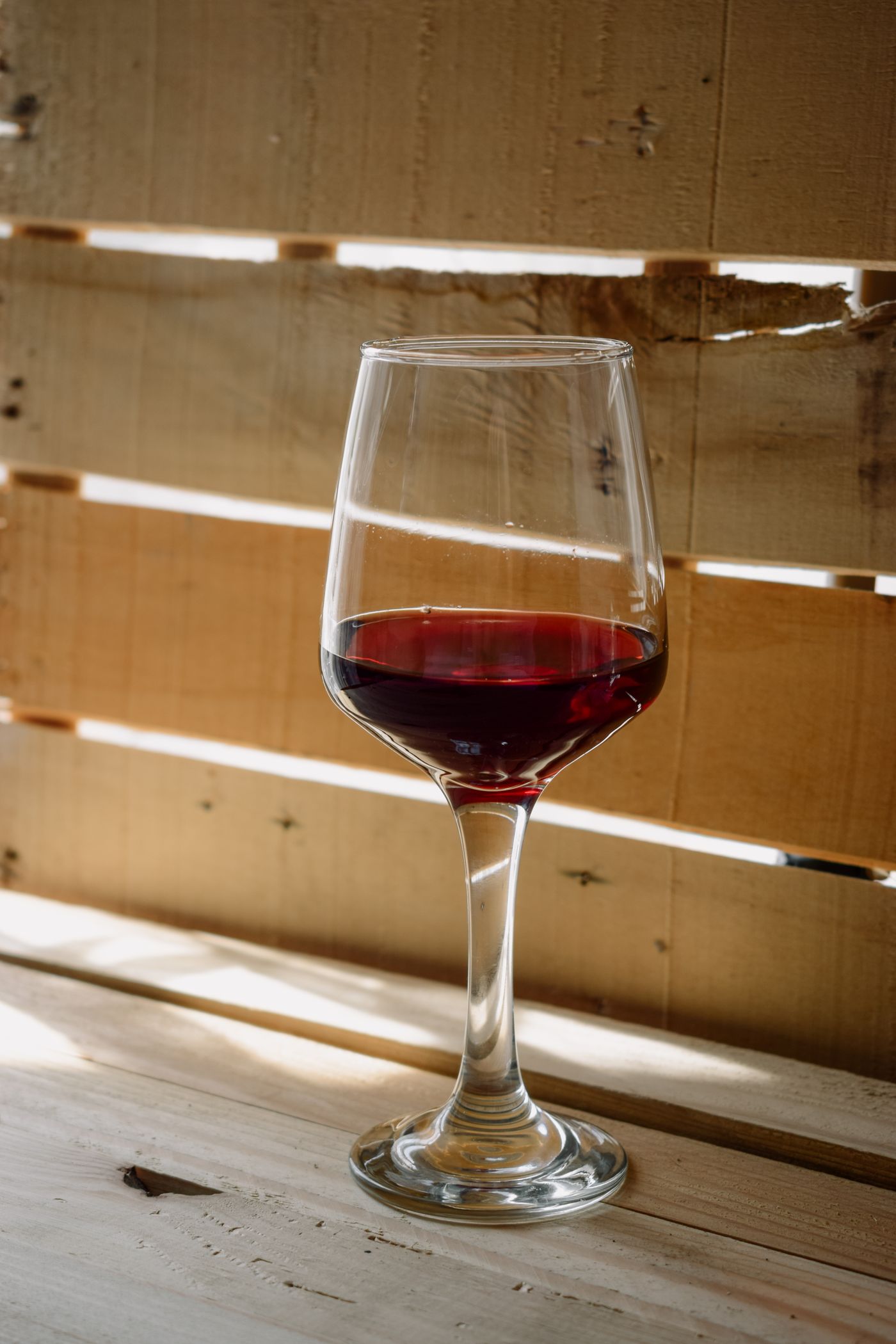
And then the wine the island is named for around the world. Madeira wine is a fortified wine with an odd origin story: centuries ago, barrels shipped as ballast on long sea voyages were found to taste better for the heat and motion, and the island turned that accident into a method. Producers now heat and age the wine deliberately through a process called estufagem, which gives it that cooked, caramel, slightly tangy character and a near-indestructible shelf life. An opened bottle can sit for weeks without much complaint.
Sweetness runs from bone dry to rich depending on the grape: Sercial is the driest, then Verdelho, then the fuller Bual, and Malmsey (Malvasia) the sweetest. Dry styles work before a meal, sweet ones after, and the Funchal wine lodges in town let you taste across the range without buying a bottle blind. This is the one souvenir that genuinely survives the trip home.
Where to actually eat it
Rough map, no restaurant names, because the good ones change and the best advice is to follow the smoke: head into the hills above the south coast for espetada, where the grill restaurants cluster and the meat is the whole event. Go down to the harbour at Câmara de Lobos for scabbard fish and the no-frills poncha bars. And work the Funchal old town and the area around the Mercado dos Lavradores for everything else — bolo do caco kiosks, custard tarts, a wine lodge, lunch.
Skip the places with laminated photo menus and a tout at the door, the same as anywhere. Madeira feeds people well and cheaply when you let it; the trick is mostly sitting down where the locals already are. For festival dates and producer details, the official tourism site, visitmadeira.com, is a sensible first stop.
Eat the meat off the stick. Have the poncha. Try the strange fish. You will not need the photo menu.