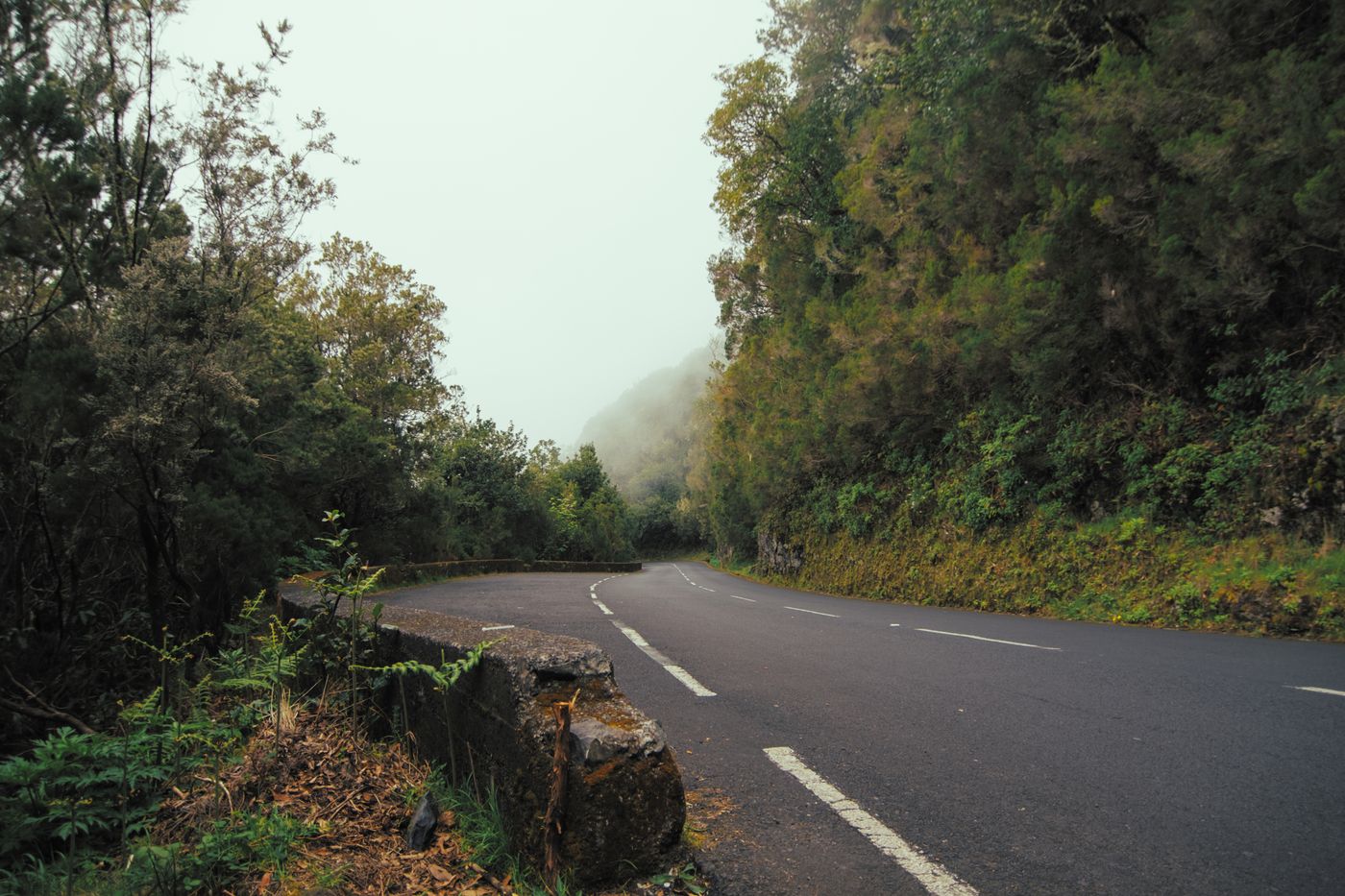
A back road climbing toward Encumeada. The fog rolls in within minutes up here, which is half the point of Madeira.
Planning · island-wide
Getting around, and when to go
Two decisions shape almost everything about a Madeira trip: how you move around the island, and which month you arrive in. Get those right and the rest mostly sorts itself out.
Madeira is small. You can drive across it in well under two hours on paper. The catch is that "across" means up and over a spine of mountains running above 1,800 metres, through dozens of tunnels, with the road folding back on itself the whole way. This island packs a lot of vertical into not much horizontal, and that single fact decides both how you travel and how you plan your days.
So before you book a thing, two questions. Do you want to drive? And do you want sea, walking weather, or festivals?
The hire car gives you the island. It also gives you the hills.
A rental car is the honest answer for most people. Madeira's best stuff is scattered: a viewpoint here, a fishing village forty minutes round the coast, a levada trailhead no bus goes near. With a car you stop when you want and reach the bits others don't. I'd take one over any other option if you're at all comfortable behind the wheel.
But know what you're signing up for. Roads here are steep, properly steep, and tunnelled to a degree that surprises first-timers. Modern expressways (the VR1 along the south, the VE roads inland) are quick and well engineered, but the moment you leave them you're on gradients that make a small underpowered car wheeze, and the old coast roads stack hairpins one above the next.
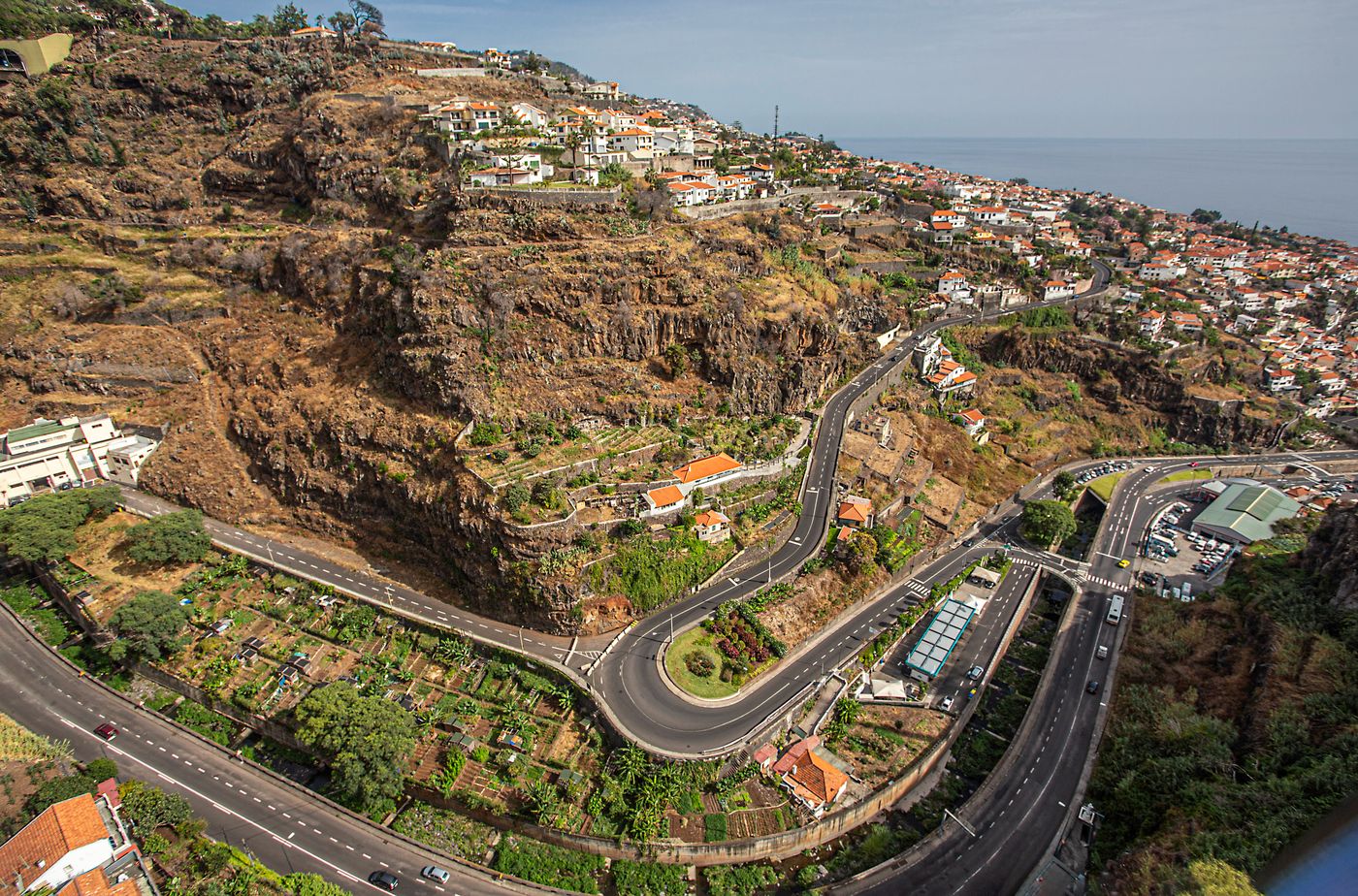
A few practical things I wish someone had told me. Get the smallest car you can live with, because Funchal parking is tight and older village streets tighter still. If hills make you nervous, pay extra for an automatic; constant clutch work on a 20 percent grade gets old fast. Garage the car in Funchal rather than hunting a kerb space; central car parks (around the Marina and the Anadia area) are cheap by mainland-European standards. And use the tunnels without guilt, they're the fast, safe way through, with the scenic old roads waiting for the days you actually want them.
The buses: great for the south, frustrating for the rest
Within Funchal and along the populated southern strip, public transport is genuinely good. The city operator, Horários do Funchal, runs frequent yellow buses around the capital and out to nearby towns like Câmara de Lobos and Caniço, and the fares are small. If you're basing yourself in Funchal and only making the odd trip along the coast, you may not need a car at all.
Leave the south, though, and it gets harder. Rural west and north are served by other companies, Rodoeste being the main one out west, and those lines run slow and infrequent, built around getting locals to and from the capital rather than tourist timetables. A bus might run three times a day. Worse, levada walks are usually linear: you start in one valley and finish in another, and the rural network rarely lines up to drop you at one end and collect you at the other. I've watched people miss the last bus from a trailhead by ten minutes. For city days, the bus is a pleasure. For ambitious hiking days without a car, it's a puzzle.
Taxis, transfers and the no-driving option
For the airport run specifically, a taxi or a pre-arranged transfer is the simple move. It's roughly twenty-five minutes into Funchal, fares are regulated, and after a long flight it's nice not to fight a manual gearbox in the dark on day one. Plenty of people who otherwise hire a car still book a transfer for the first and last legs.
If you'd rather not drive at all, that's a reasonable choice here. Base in Funchal, use the city buses for the easy stuff, then fill the harder days with organised day trips that handle the driving and the trailhead logistics. I get into the trade-offs over in how to see the island, but the short version: a guided day out is the path of least resistance for the west, the north, and the peaks.
My honest take: rent a car for the freedom, but if the idea of hairpins in fog ruins your holiday before it starts, don't force it. A car you're scared to drive isn't freedom, it's a parked rental fee.
When to go: there's no bad month, only different ones
Madeira sits far enough south, off the coast of North Africa, that it's mild all year. The phrase locals like is "eternal spring," and while that's tourist-board language, the temperatures back it up: rarely cold by the sea, rarely scorching. You can visit in any month and have a good time. What changes is the kind of good time.
Sea temperatures peak from roughly August through October, well after the air has, because the Atlantic takes its time to heat up and then holds it. If swimming and the natural rock pools at Porto Moniz are your priority, aim for early autumn. For walking, spring and autumn are the sweet spots: laurel forest lush, waterfalls running hard, and no hiking a levada in the full glare of August. Winter is the wettest stretch, especially up north and on the peaks, and snow on Pico Ruivo, the island's highest point at 1,862 metres, is not unusual in January and February. Funchal stays mild through winter; up high it's a different climate entirely.
Which brings up the thing nobody warns you about enough. Madeira's microclimates are dramatic. Funchal and the south are the dry, sunny side. The north is wetter and greener, soaking up cloud the mountains wring out. And the peaks frequently sit above the cloud line, so you can leave a grey, drizzly coast, drive twenty minutes uphill, and break out into brilliant sun with a white sea below you. It works in reverse too. Check the mountain forecast separately from the coast, and if the high viewpoints are socked in on your planned day, swap the itinerary around. Weather here is local, not island-wide.
| Season | Weather | Good for |
|---|---|---|
| Spring (Mar–May) | Mild, green, flowers everywhere; occasional showers | Walking, the Flower Festival, fewer crowds |
| Summer (Jun–Aug) | Warm and busy; south stays sunny, peaks can be hazy | Long days, festivals, fireworks; sea still warming |
| Autumn (Sep–Oct) | Warm sea, settled light, comfortable hiking temps | Swimming, levadas, the wine harvest |
| Winter (Nov–Feb) | Mild by the coast, wet in the north, snow possible on the peaks | Quiet, green, dramatic skies; the New Year fireworks |
The festivals worth timing a trip around
A few events here are good enough to plan around. The Flower Festival fills central Funchal with floral carpets and a children's parade a couple of weeks after Easter. June brings the Atlantic Festival, with international fireworks launched over the bay on Saturday nights through the month. September is the Madeira Wine Festival, centred on Funchal and the grape-growing town of Estreito de Câmara de Lobos, with grape-treading and tastings at harvest time.
And then there's New Year's Eve. Funchal's amphitheatre of a bay, houses climbing the hillside, is built for it, and the display ranks among the biggest in the world. Hotels book out a year ahead and prices climb, so if that's the trip you want, reserve early. The island's own official tourism site keeps an event calendar worth a glance before you lock in dates.
What to pack, in one paragraph
Layers, always. People's single biggest mistake is dressing for the coast and then freezing at altitude, because a sunny 24 degrees in Funchal can be a windy 8 on Pico do Arieiro within the hour. Bring a proper rain shell, since the north and the peaks catch weather even when the south is dry. Pack real walking shoes with grip, not trainers. And carry a torch, a phone light won't cut it, for the levada tunnels: several of the best walks pass through pitch-black rock galleries where you genuinely cannot see your feet.