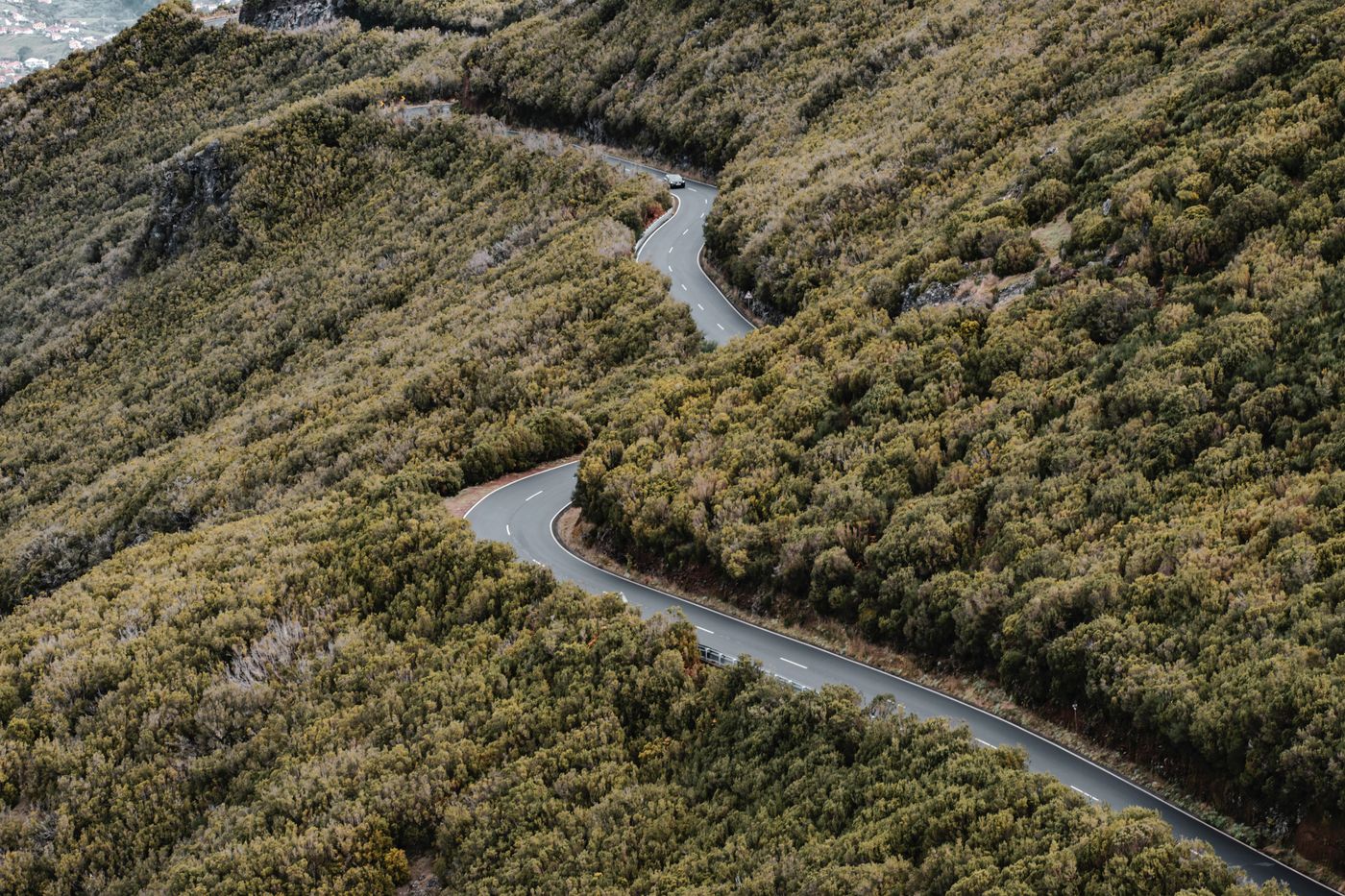
The interior is mostly switchbacks and tunnels. How you get over them decides your whole trip.
Planning · the whole island
Madeira tours: how to see the island
An honest rundown of the main ways to see Madeira — what's worth a guide, and what you're better off doing under your own steam.
Madeira is small — about 57 km end to end — but it doesn't behave like a small place. A mountain spine over 1,800 m runs down the middle, the two coasts can have different weather on the same afternoon, and the roads are a lattice of tunnels and hairpins that turn a 30 km hop into an hour. So the first real question isn't where to go. It's how you cover ground without losing half the trip to logistics.
The range of madeira tours on offer can be bewildering, especially once you start reading the leaflet racks in Funchal. Half of them sell the same loop with a different sticker on the minibus. Here's what the categories actually mean, and where each one earns the money.
The 4x4 island day, and why people pay for it
The signature product is the jeep safari — a half-day or full-day run in a high-clearance 4x4, usually pitched at the wilder northwest. Done well, it takes you onto rough forestry tracks a hire car has no business on: the Fanal plateau with its gnarled ancient laurels in fog, the old roads above Porto Moniz, the high posto florestal tracks across the central plateau, and the long way round to Santana.
Its case is genuine. Those tracks are unsigned, often single-lane mud, and a scratch or a buried wheel on a rental is your deposit gone. A driver who runs them weekly knows where the cloud sits and when to flip the plan to the other coast. The case against: some operators spend more time on tarmac than dirt, and "safari" can mean a diesel minibus with a roof rack. Ask, before you pay, how much of the day is actually off-road.
Guided levada walks — the one I'd pay for first
Madeira's levadas are the irrigation channels that thread the mountains, and the footpaths beside them are the island's best walking. Geography is the problem here, not difficulty: the great ones are linear. You finish miles from where you started, often over a ridge, with no easy way back to your car.
That's exactly what a guided levada walk solves. A good one includes transfers at both ends — picked up in Funchal or your resort, dropped at the trailhead, collected at the far end. For walks like the 25 Fontes and Risco out of Rabaçal, or the cloud-forest stretch of the Caldeirão Verde above Santana, that transport-at-both-ends is worth more than the guiding itself. If you don't drive, this is the single most useful tour on the island. The forestry service ICNF manages much of this terrain and occasionally closes paths after rockfall, which a guide will know about before you've laced your boots — current trail status is posted via the regional nature body, the IFCN.
For a linear levada, you're not really buying a guide. You're buying the lift back.
Funchal, Monte, and the city half-day
City tours are the easiest to skip and the easiest to under-rate. Funchal is walkable, the Sé cathedral and the Lavradores market sit ten minutes apart, and a guided walk past the painted doors of the Zona Velha tells you things a map won't. The Monte add-on is the real draw: the cable car up, the tropical garden, then the wicker toboggan run back down towards Livramento — two men in straw hats steering a basket sledge down a public road, exactly as daft and as fun as that sounds. You can do all of it independently, per ticket; a tour mainly saves you the orientation and the queuing. Worth a first morning, not essential.
West loop or east loop? Pick one, not both in a day
The two classic full-day coach or minibus tours split the island in half, and trying to merge them is how people end up seeing everything through a window.
The west day runs along the south coast and up the dramatic northwest: the glass-floored skywalk at Cabo Girão — one of Europe's highest sea cliffs — the fishing town of Câmara de Lobos where Churchill painted, the volcanic tide pools at Porto Moniz, the waterfalls and black-sand cove at Seixal, and the rebuilt coast road into São Vicente. It's the more spectacular half for sheer cliff and ocean.
The east day trades coastline for mountains and villages: the painted A-frame casas de colmo at Santana, the bare volcanic fingers of the Ponta de São Lourenço peninsula in the far east, and usually a stop at Pico do Arieiro for the summit view. Greener, gentler, more about texture than drama.
My honest take: if you have only one tour day, go west for the scenery. If you have two, do both on separate days and let the minibus handle the driving while you actually look out the window.
On the water: whales, dolphins, and the catamaran
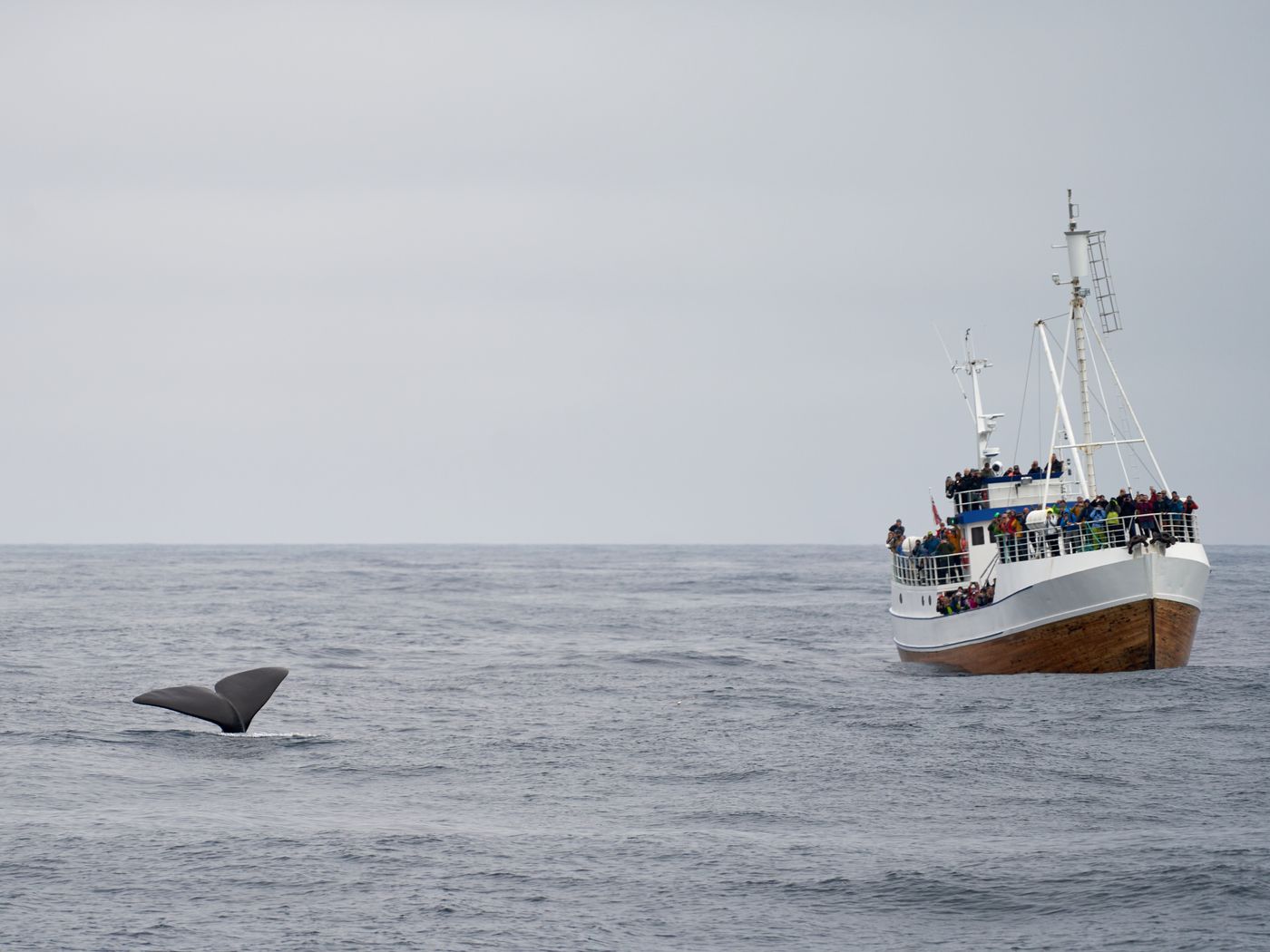
Deep Atlantic water close to shore makes Madeira one of the better spots in Europe for cetaceans. Boats leave from Funchal marina and from Calheta in the west, from fast RIB chases to slower catamarans with a swim stop. Resident dolphins show up most of the year; the bigger draw is seasonal sperm and pilot whales, more reliable roughly late spring through autumn. Pick an operator that cuts engines and keeps its distance rather than crowding the animals — and note that sightings are never guaranteed, whatever the brochure says.
The sunrise run up Pico do Arieiro
Watching the sun come up from Pico do Arieiro, at 1,818 m, above a sea of cloud is the island's postcard moment. The catch is the getting there: a dark, cold, twisting mountain road at 5 a.m., often into fog, sometimes with ice in winter. The sunrise tour exists precisely so you don't drive it half-asleep. You're collected before dawn, driven up, and handed a coffee while someone else worries about the bends. If you'd rather drive yourself, go — but know the summit can be socked in cloud while Funchal is clear, and there's no refund on weather.
Wine and the tasting afternoon
Madeira wine is the island's other heritage — fortified, deliberately heated and aged until it's near-indestructible. Lodges in central Funchal pour daily and you don't need a tour to walk in. A guided wine afternoon earns its keep only if you want the context — Sercial versus Malmsey, why the stuff survived long sea voyages — or several pours without driving afterwards. For one lodge, just turn up.
How the tour types stack up
| Tour | Best for | Half / full day | Rough idea |
|---|---|---|---|
| 4x4 jeep island tour | Rough NW tracks, Fanal, Santana, the plateau | Both offered | Mid; private costs more |
| Guided levada walk | Linear trails with transport solved at both ends | Usually full | Mid; varies by group size |
| Funchal & Monte city tour | First-morning orientation, cable car, toboggan | Half | Lower; tickets often extra |
| West day (Cabo Girão, Porto Moniz, Seixal) | Cliffs and dramatic coast | Full | Mid |
| East day (Santana, Ponta de São Lourenço) | Villages, peninsula, mountain texture | Full | Mid |
| Whale & dolphin boat trip | Atlantic wildlife from Funchal or Calheta | Half | Mid; RIB vs catamaran differs |
| Sunrise at Pico do Arieiro | Summit sunrise without the dark drive | Half (pre-dawn) | Mid |
| Wine tasting afternoon | Context, several pours, no driving after | Half | Lower; varies |
The case for a hire car
For most able drivers staying more than a few days, a small hire car is the better answer. Freedom is the whole point: you leave when the cloud lifts, you stop at the miradouro nobody's selling, you eat lunch in a village the coach skips. Madeira rewards that flexibility more than almost anywhere, because the weather is so local — clouded north, blazing south, and you can chase the sun.
It isn't effortless. Roads are narrow, gradients steep, and the island runs on tunnels — some several kilometres long, a few still single-lane with priority signs you must read fast. Funchal parking is tight and mostly paid; use a garage and walk. Take a small car, not the upgrade — you'll thank yourself on a one-lane village street with a wall each side and a bus coming the other way. None of it is dangerous for a confident driver who respects the bends. If that's not you, take the hint and let someone else drive.
So what should you actually book?
The pattern that works: a hire car for the freedom days, and a guide for the specific things a car can't solve. Take a tour for the linear levada walks where transport at both ends is the real prize. Take one for the rough northwest tracks, where a rental shouldn't go. Take one for sunrise at altitude if you'd rather not drive a dark mountain in the cold. And take one if you simply don't want to drive at all — there's no shame in it, and the island is hard enough that handing over the wheel can be the best decision of the trip. For the planning of train-free transfers and which side of the island to base yourself, the regional Madeira travel resources are a sober starting point, and the official Madeira tourism board keeps event and opening details current.
Everything else — the city walk, the single wine lodge, the catamaran — you can take or leave. Buy the days that buy back your time. Skip the ones that just sell you a window seat to places you could reach yourself.