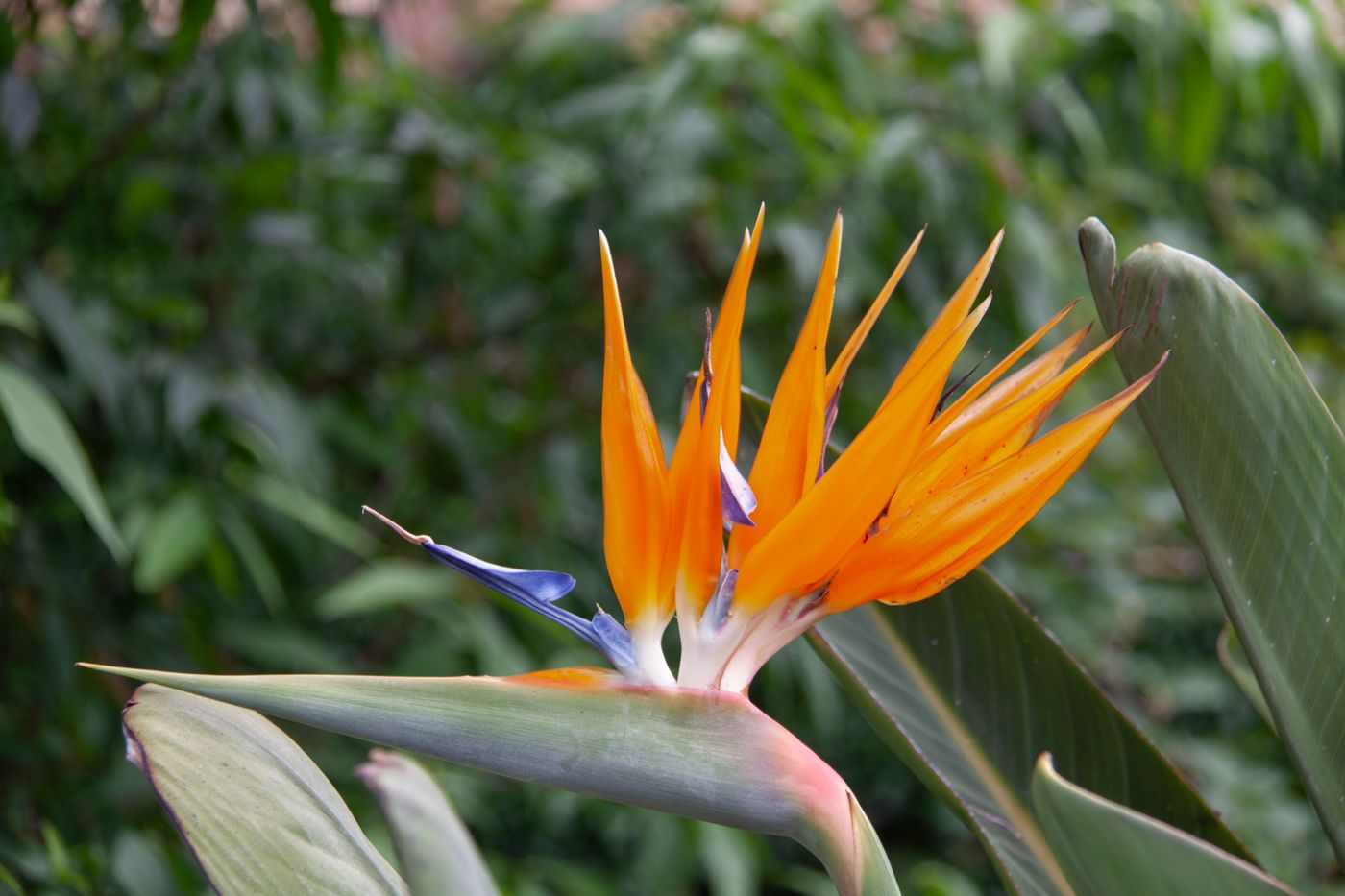
The strelitzia, or bird of paradise — Madeira's floral signature and the easiest flower on the island to recognise.
Funchal · 200 m
The gardens above the bay
Madeira earned the name "floating garden" on these hillsides, not down at sea level. The walk, drive, or cable car up to them is half the reason to go.
Funchal is built on a slope. Down at the bottom sits the harbour, the airport road climbs out to the east, and behind the city the land tips up fast toward the peaks. Almost everything green and worth seeing is somewhere on that incline. Big gardens are no exception, and getting to them means going up, by road or by cable, which is part of why a visit takes longer and feels better than the map suggests.
A mild, wet-then-dry subtropical climate does the heavy lifting. Frost is rare near the coast, trade winds keep summers from baking, and plants from South Africa, South America and Southeast Asia all settle in as if they were home. That mix is the whole story of Madeira's gardens: things that would never share a bed in the wild grow side by side here.
The botanical garden, where the colour is
The Jardim Botânico da Madeira sits on the hillside east of the centre, in the Quinta do Bom Sucesso, an old estate the regional government turned into a public garden. It opened to the public in 1960 and covers about eight hectares, which sounds modest until you start walking the terraces and realise how much they pack into the drop.
Everyone photographs the geometric beds: low hedges and gravel clipped into sharp blocks of red, ochre and silver-green, laid out so they read as a pattern from the path above. That is the bit that ends up on postcards. Spend ten minutes there, then keep going, because the garden is really several gardens stitched together. A serious succulent and cactus collection covers the dry, sun-facing terraces, agaves and aloes and barrel cacti that look almost out of place against an Atlantic island. Higher up, a section is given over to indigenous Madeiran plants and a patch of laurisilva, the laurel forest that once covered the lower slopes and now survives mostly in the north. It is a small, useful preview of what you would see on a walk through Fanal.
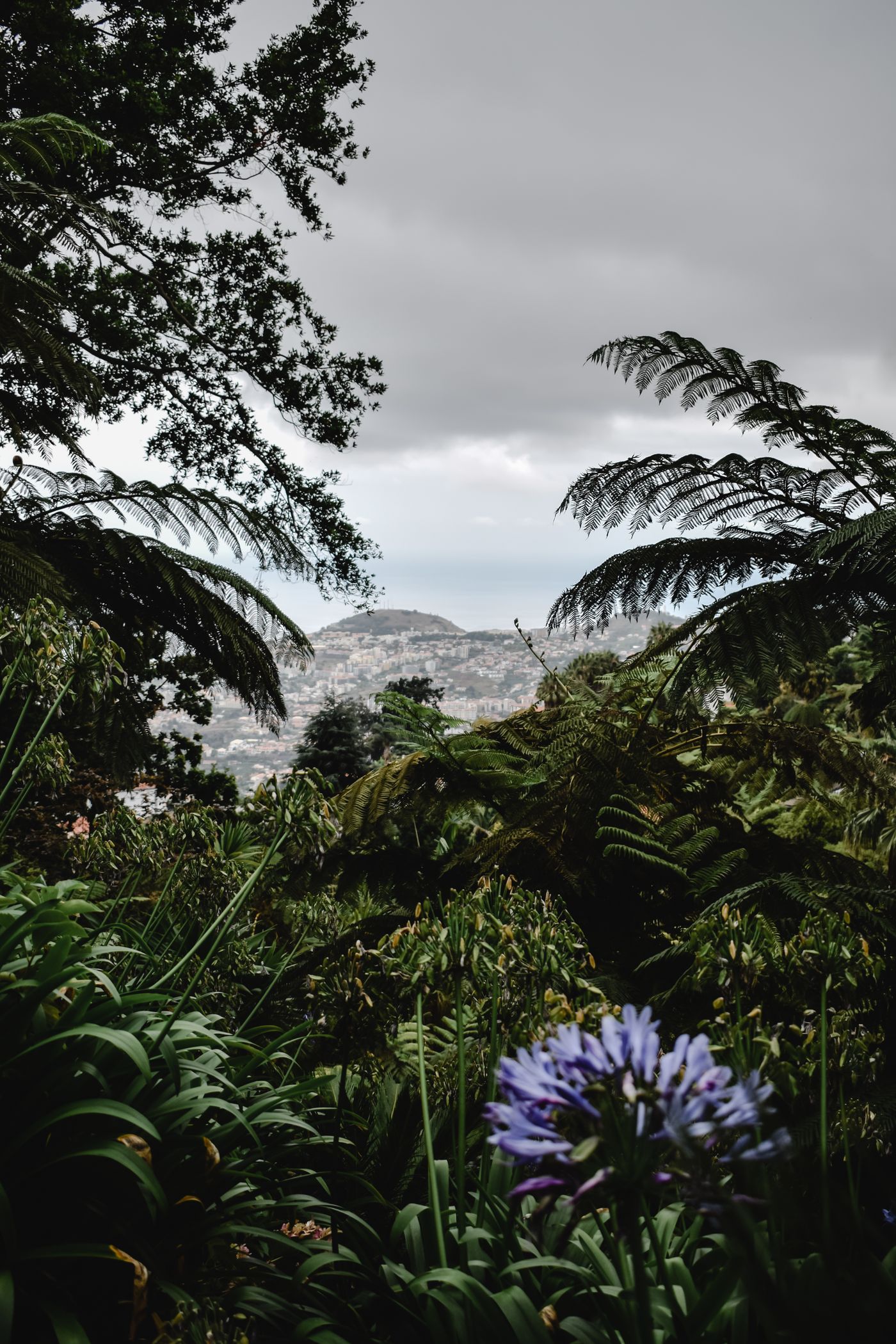
And then there is the view. Facing south and west, the terraces keep opening onto Funchal below: red roofs, the harbour wall, a cruise ship if one is in, and the flat grey water beyond. On a clear morning you can pick out the airport headland. The plants are reason enough, but the bay is what makes people sit down on a bench and stay longer than they meant to.
Getting up there without losing the morning
There are three honest ways up. A taxi or pre-arranged car takes about fifteen minutes from the seafront and drops you at the gate, which is the simple option if the weather is iffy or you are short on time. City bus lines run up the valley too, cheaper but slower and a short uphill walk at the end. The cable car is the one to take if the day is fine, because the ten-minute glide over the valley, with gardens and banana terraces dropping away beneath the cabin, is the kind of arrival that sets the tone.
Go in the morning. The light is on the bay, the air is cooler on the terraces, and you beat the cruise crowd that drifts up after lunch.
Allow a couple of hours for the botanical garden alone, more if you are linking it with Monte. Wear shoes you can walk terraces in. The paths are paved but they climb and drop constantly, and the gravel beds and stone steps are no place for the sandals you wore to breakfast. Bring water in summer; the dry terraces hold the heat.
Monte, and the garden you climb to
Higher up the same slope, at Monte, sits the Monte Palace Tropical Garden, a denser, shadier, more theatrical place than the botanical garden. Where the Jardim Botânico is about order and collections, Monte is about atmosphere: koi ponds, a Japanese-style section, tiled panels set into the walls, tree ferns leaning over dark paths, and water running through most of it. It is built around an old hotel estate and feels half botanical garden, half open-air museum. Many people pair it with the wicker toboggan run that starts at Monte and slides back toward town, which is a story for another page.
Each garden rewards a different mood. Come to the botanical garden for the colour, the structure and the view; come to Monte for the shade and the staging. Doing both in one outing makes a full, satisfying day, and the cable cars take the sting out of the up-and-along. If you only have time for one, choose by weather: bright day, the botanical garden and its bay; grey or hot day, the cool tunnels of Monte.
Blandy's, for a slower kind of garden
Out past the eastern edge of town, at about five hundred metres, the Quinta do Palheiro Ferreiro, usually called Blandy's Garden after the family who have kept it for generations, is a different tradition again. This one is an English-style estate garden: long lawns, clipped hedges, a camellia walk that is spectacular in late winter, and beds that blend formal European planting with the subtropical species the climate allows. It is quieter than the other two, draws fewer cruise visitors, and feels more like wandering a private estate that happens to let people in. Worth the trip if gardens are genuinely your reason for coming to the island, less essential if you are squeezing one in between a market morning and a coast drive.
What grows here, and why it became the island's emblem
If Madeira has a flower, it is the strelitzia, the bird of paradise, with its spiky orange-and-blue head that looks more like a crane than a bloom. You will see it in every garden, in hotel lobbies, bundled in buckets at the market, and printed on roughly half the souvenirs on the island. It is not native, but it has become the local signature, and it flowers for much of the year. The botanical reason it does so well is the same reason everything does: a frost-free coast and a long growing season. There is a tidy primer on the strelitzia genus if you want the family tree.
What genuinely belongs here is the dragon tree, Dracaena draco, with its thick trunk and a dense, umbrella-shaped crown of stiff grey-green leaves. It is native to Madeira and the wider Macaronesian islands, and when its bark or leaves are cut they bleed a reddish resin called dragon's blood, once used as a dye and varnish. Old specimens grow slowly and live for centuries; there are good examples in the gardens and a few scattered around Funchal's older squares.
Then there are the jacarandas. For a few weeks in spring, usually through May, the avenues of central Funchal turn lilac-blue as the jacaranda trees flower all at once and then drop their petals onto the pavements. It is the one time the city itself competes with the gardens for colour. Bougainvillea spills over walls year-round, agapanthus lines the roadsides in summer, and somewhere on every hillside something is in bloom. The "floating garden" tag is marketing, but it is the rare bit of tourist-board language that turns out to be more or less true.
For opening hours, current ticket prices and whether the cable cars are running on the day you go, check the official Madeira tourism site before you set out, since timetables shift with the season and the weather closes things more often than you would expect on a subtropical island.